
The Impact of Furniture Aluminum Profile Thickness
As a custom furniture aluminum profile factory, one of the most common questions I receive from furniture manufacturers, cabinet brands, and project contractors is: "What thickness should we choose for our furniture aluminum profiles?" Many buyers focus on profile shape, surface finish, or color, but profile thickness is actually one of the most important factors affecting structural performance, production cost, machining capability, and long-term durability.
After more than 20 years of manufacturing custom furniture aluminum profiles, I have found that selecting the correct wall thickness is often the difference between a stable furniture system and one that experiences deformation, assembly issues, or unnecessary cost increases. In this article, I will explain the three most important impacts of furniture aluminum profile thickness and how we help customers choose the most suitable solution based on their actual applications.
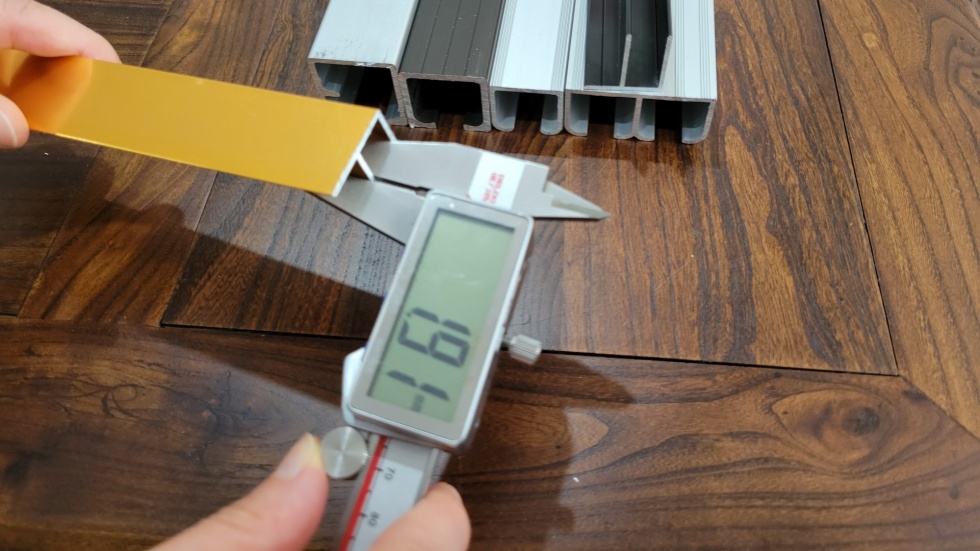
Why Furniture Aluminum Profile Thickness Matters
Thickness determines how much material exists in the profile wall. In furniture applications such as cabinet frames, wardrobe systems, display shelves, glass door frames, and aluminum furniture structures, wall thickness directly influences load-bearing performance, machining reliability, fastening strength, and overall product lifespan. Choosing a thickness that is too thin may reduce structural stability, while selecting a thickness that is too thick may increase material costs without creating meaningful performance improvements.
Point 1: Thickness Directly Affects Structural Strength and Stability
The first factor I always evaluate is structural strength. Furniture aluminum profiles must withstand various loads during transportation, installation, and long-term use. A thicker profile wall generally provides higher rigidity and better resistance to bending or deformation. This becomes particularly important for large cabinet doors, wardrobe systems, display cabinets, and furniture frames that support glass panels.
For example, when manufacturing custom cabinet frame aluminum profiles, I often recommend thicker wall structures for large-format doors because they maintain alignment more effectively over time. Thin profiles may perform adequately for lightweight decorative applications, but they can become unstable when supporting heavy panels or hardware systems.
As a custom furniture aluminum extrusion manufacturer, we perform section analysis and evaluate load requirements before recommending wall thickness. This helps our customers achieve reliable performance without overspending on unnecessary material.
Point 2: Thickness Influences Machining Quality and Assembly Performance
The second factor is manufacturing and assembly capability. Furniture aluminum profiles often require drilling, milling, punching, tapping, CNC machining, and connector installation. If the wall thickness is too thin, screw retention strength may decrease, machining tolerance may become difficult to control, and assembly reliability may suffer.
In our factory, many custom furniture aluminum profile projects involve precision machining for concealed connectors, glass accessories, handle systems, and modular furniture structures. Profiles with suitable wall thickness provide stronger screw engagement and more consistent machining results, reducing installation problems during final assembly.
When we develop a new furniture aluminum profile supplier project, our engineering team evaluates the planned machining operations before finalizing the profile design. This allows us to optimize both production efficiency and assembly performance.
Point 3: Thickness Has a Major Impact on Manufacturing Cost
The third factor is cost. Many buyers assume that thicker aluminum profiles automatically represent higher quality. In reality, excessive thickness often increases material consumption, profile weight, transportation cost, and manufacturing expenses without providing proportional performance benefits.
My recommendation is always to match thickness with the actual application. A properly engineered profile can achieve excellent structural performance through optimized cross-sectional design rather than simply increasing wall thickness. This approach helps furniture manufacturers maintain competitiveness while ensuring product reliability.
As a custom furniture aluminum profile factory, we frequently help customers redesign existing profiles to reduce weight and material consumption while maintaining the required strength. This creates significant savings during mass production.
Why I Recommend Working with Our Custom Furniture Aluminum Profile Factory
When selecting a furniture aluminum profile manufacturer, profile thickness should never be considered independently. It must be evaluated together with profile geometry, alloy selection, extrusion capability, machining requirements, surface treatment, and final application conditions.
I recommend our factory because we provide complete engineering support throughout the entire project lifecycle. From profile design and mold development to extrusion, CNC machining, anodizing, powder coating, packaging, and shipment, every stage is managed internally to ensure consistent quality.
Our advantages include:
More than 20 years of aluminum profile manufacturing experience.
Professional engineering support for custom furniture aluminum profiles.
Custom mold development and section optimization.
Precision CNC machining and fabrication services.
Anodizing, powder coating, wood grain, and custom finishes.
Strict dimensional and surface quality control.
Flexible production volumes for both OEM and ODM projects.
For furniture brands, cabinet manufacturers, wardrobe factories, and project contractors, our goal is not simply to supply aluminum profiles. We help customers identify the most suitable thickness and profile structure to balance performance, appearance, manufacturability, and cost.
Come and Grt Your Own Customized Aluminum Profile Report
Recommended Thickness Selection for Common Furniture Applications
| Application | Typical Thickness | Main Consideration | Recommendation |
|---|---|---|---|
| Decorative Trim Profiles | 0.8-1.2 mm | Appearance | Lightweight and economical |
| Cabinet Door Frames | 1.2-1.8 mm | Strength and stability | Most common furniture application |
| Wardrobe Frame Systems | 1.5-2.0 mm | Load-bearing performance | Suitable for large structures |
| Glass Door Profiles | 1.5-2.5 mm | Hardware support | Recommended for long-term durability |
| Heavy-Duty Furniture Structures | 2.0-3.0 mm | Maximum rigidity | High-load applications |
Conclusion
Furniture aluminum profile thickness affects far more than appearance. It directly influences structural stability, machining quality, assembly performance, and manufacturing cost. Based on my experience as a custom furniture aluminum profile factory, the best solution is not necessarily the thickest profile, but the profile that has been properly engineered for its intended application.
By working with an experienced custom furniture aluminum extrusion manufacturer, furniture brands can achieve the right balance between strength, quality, and cost efficiency. Our engineering team is ready to help customers develop custom furniture aluminum profiles that meet both performance and commercial requirements.
Frequently Asked Questions
1. What is the most common thickness for furniture aluminum profiles?
For most cabinet and wardrobe frame applications, wall thicknesses between 1.2 mm and 1.8 mm provide a good balance between strength, weight, and cost.
2. Does a thicker aluminum profile always mean better quality?
No. Profile design, alloy selection, manufacturing precision, and surface treatment are equally important. Excessive thickness can increase costs without improving performance.
3. How do I choose the right thickness for a cabinet frame profile?
The correct thickness depends on door size, panel weight, hardware configuration, and installation requirements. Engineering evaluation is recommended before finalizing the design.
4. Can thin aluminum profiles still be strong?
Yes. A well-designed profile cross-section can provide excellent rigidity even with relatively thin walls, helping reduce weight and material costs.
5. Does thickness affect CNC machining and assembly?
Yes. Appropriate wall thickness improves screw retention, machining accuracy, and overall assembly reliability, especially in furniture systems with multiple hardware components.
Related Reading
what is the tolerance of aluminum profiles

 Email
Email Whatsapp