
U-Shaped Glass Profiles in Bathroom Systems
In my experience manufacturing and evaluating aluminum profile systems for bathroom applications, the U-shaped glass profile is much more than a decorative aluminum component. It is one of the most important structural parts inside a sliding shower door or bathroom partition system. The profile determines whether the glass stays stable, whether the rollers move smoothly, and whether the entire system can maintain long-term durability in high-humidity environments.
In practical manufacturing, I have learned that even small dimensional deviations can directly affect installation quality. A groove tolerance difference of only 0.2 mm may change gasket compression pressure significantly. When this happens, the sliding movement of the glass door becomes inconsistent, especially after long-term exposure to humidity and soap residue accumulation.
In this guide, I will explain how I approach U-shaped glass profile systems based on practical manufacturing and installation experience, including structural data, dimensional recommendations, and durability considerations used in real projects.
Application Scenarios: Where U-Shaped Glass Profiles Are Used in Bathroom Systems
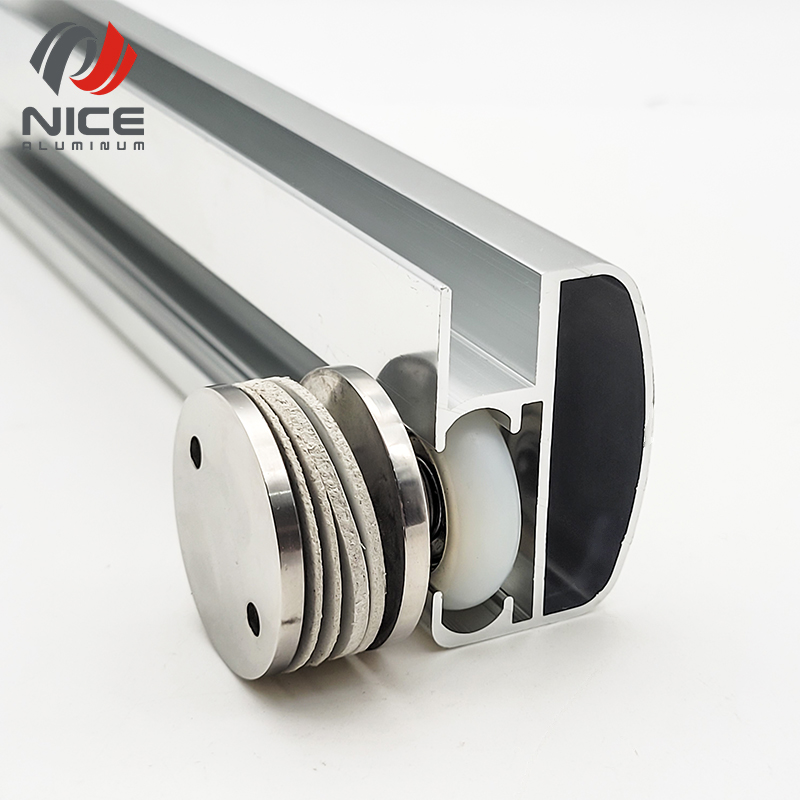
U-shaped glass profiles are commonly used in shower enclosures, wet-room partitions, sliding bathroom doors, and semi-frameless glass systems. Their main purpose is to stabilize the edge of the glass while maintaining a cleaner and more modern appearance compared with traditional heavy aluminum frames.
In standard shower enclosures, the U-channel usually functions as a wall-side support or floor guide. These systems generally use 8 mm tempered glass because it provides a balance between weight and impact resistance. Bathroom environments often maintain humidity levels above 90% relative humidity, and water spray pressure may reach 0.2–0.5 bar during daily use. Because of this, the profile surface treatment must resist corrosion continuously.
For this reason, I usually recommend anodized aluminum with oxide layer thickness above 15 microns. In coastal regions or luxury hotel projects where cleaning chemicals are frequently used, I prefer 18–20 micron anodizing because chlorine-based cleaners can accelerate corrosion on low-quality coatings.
I have seen installations where low-quality profiles below 1.0 mm wall thickness began deforming after less than two years of use. Once deformation starts, roller alignment changes, friction increases, and glass vibration becomes noticeable during sliding.
Sliding bathroom doors create even higher engineering requirements. Unlike fixed glass partitions, sliding systems operate continuously under mechanical stress. A typical residential sliding shower door may experience more than 50,000 opening and closing cycles during its service life. Commercial projects such as hotels or apartments can exceed 100,000 cycles.
Because of this repeated motion, even a small installation error becomes magnified over time. In my own measurements, a U-channel deviation of only 2 mm can increase roller resistance by approximately 30–40%. This not only affects smoothness but also shortens the lifespan of rollers significantly.
Glass Thickness Compatibility: How to Match U-Channels with Glass Correctly
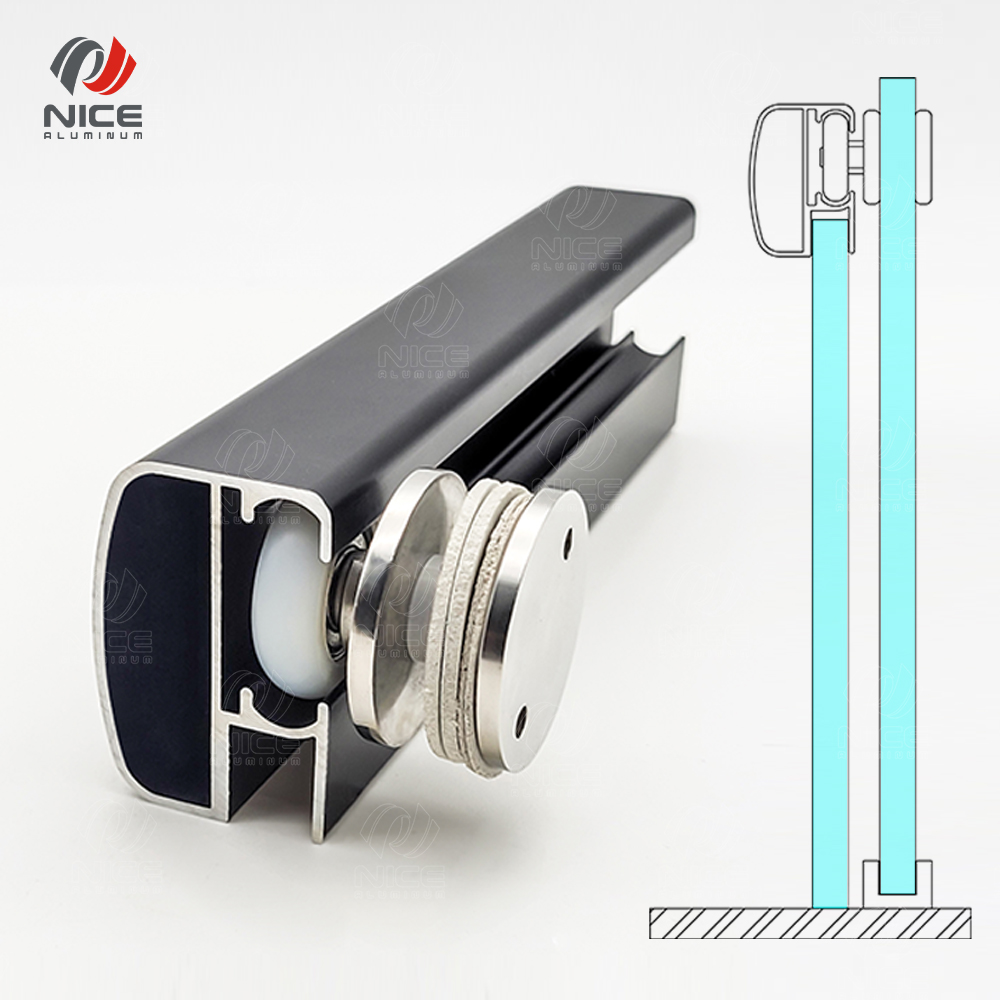
Glass thickness compatibility is one of the most critical factors in U-channel engineering. In my experience, many long-term failures are not caused by the glass itself but by incorrect matching between the glass thickness and the internal groove dimensions of the aluminum profile.
The U-channel must hold the glass securely while still allowing controlled movement caused by thermal expansion and vibration. If the groove is too tight, stress transfers directly to the glass edge. If the groove is too loose, the glass vibrates during movement and creates noise.
For bathroom systems, I normally work with three standard glass thicknesses: 6 mm, 8 mm, and 10 mm tempered glass.
For 6 mm glass, the internal groove width is usually 6.2–6.5 mm. This configuration is mainly suitable for lightweight partitions below 1800 mm height. While 6 mm glass reduces overall system weight, its impact resistance is lower, so I rarely recommend it for heavy sliding door applications.
The most common specification in modern bathroom systems is 8 mm tempered glass. In this case, the groove width is generally 8.3–8.6 mm. This provides enough clearance for gasket compression while maintaining structural stability. An 8 mm tempered glass panel can normally support heights up to 2200 mm in standard residential installations.
In practical applications, 8 mm glass also creates a good balance between production cost and transportation safety. Compared with 10 mm glass, the weight reduction may exceed 20%, which lowers installation difficulty and reduces stress on the roller structure.
For premium frameless systems, 10 mm tempered glass is increasingly popular because it creates a stronger visual appearance and better acoustic stability. The groove width for 10 mm glass is usually 10.3–10.7 mm. At this thickness, the weight increases significantly.
Noise control is another hidden factor. Properly designed U-channel systems can reduce vibration noise by approximately 30–40% during sliding operation. This becomes especially important in high-end residential and hotel projects where acoustic comfort is part of the customer experience.
From my perspective, the glass, gasket, and U-channel should always be treated as one integrated structural system rather than independent components.
Door Type and Roller Structure: Why Mechanical Alignment Matters
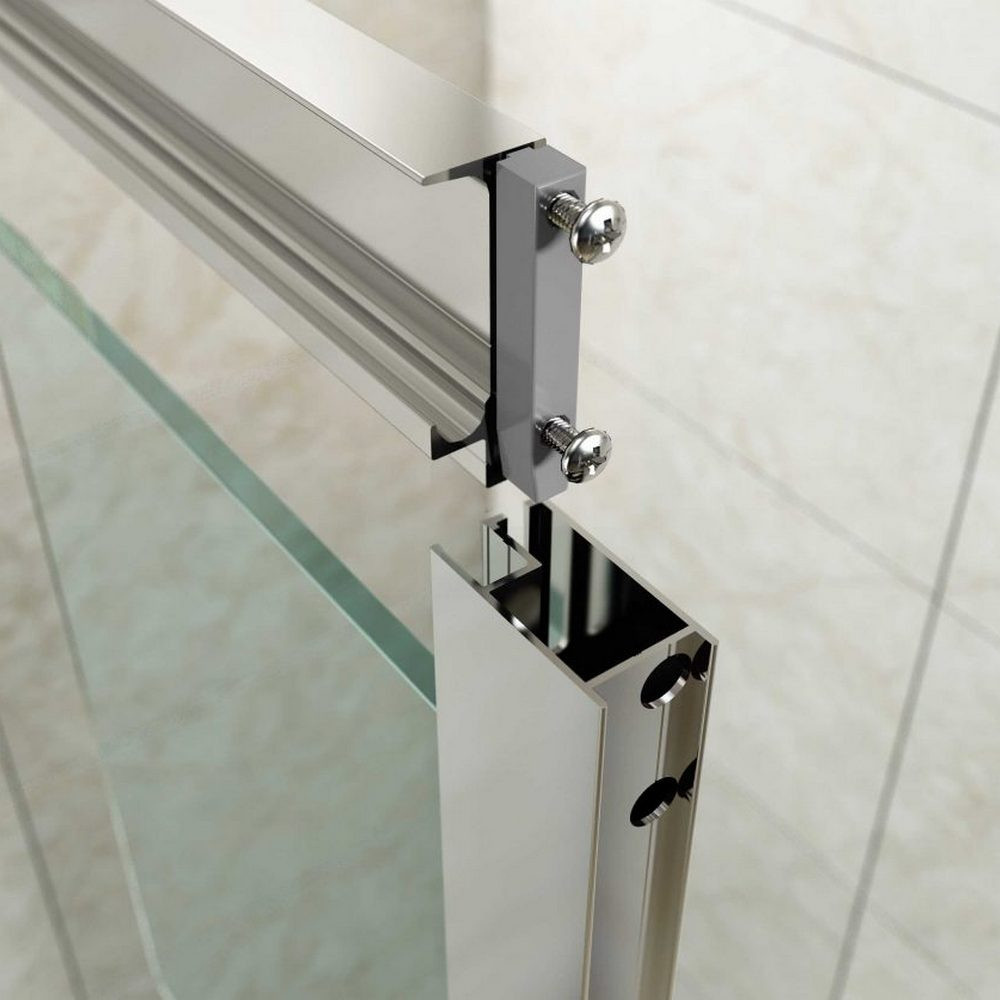
Sliding bathroom doors are mechanical systems operating under continuous load cycles. The relationship between the roller system and the U-channel directly determines movement smoothness, durability, and maintenance frequency.
The U-channel stabilizes the bottom edge of the glass and prevents lateral movement. Even a 1° alignment error may change roller load distribution by 10–15%, causing uneven wear over time.
In humid bathroom environments, roller friction coefficients may increase from around 0.15 to 0.25 due to moisture and condensation. Because of this, I always maintain 2–3 mm lateral clearance between the guide structure and the glass edge.
Roller materials also affect long-term performance. High-quality systems typically use stainless steel rollers with nylon coating. These reduce operational noise and resist corrosion much better than zinc-alloy alternatives.
Stainless steel rollers are especially important in coastal or tropical regions. I have seen zinc-alloy roller systems develop corrosion spots within less than one year under high humidity conditions. Once corrosion reaches the bearing structure, movement becomes rough and noisy.
Soft-close systems are now increasingly used in premium shower door systems. These mechanisms reduce closing impact force by approximately 70–80%, helping extend the lifespan of both rollers and aluminum profiles.
I also recommend checking roller bearing quality carefully. Bearings with poor lubrication performance create uneven movement after repeated exposure to water vapor. In high-traffic environments such as hotels, bearing failure becomes one of the most common maintenance problems.
In practical installations, I normally test the door movement at least 30–50 times before final sealing. This helps identify hidden alignment problems that may not appear during the first few opening cycles.
For higher-end projects, I also prefer drainage-integrated bottom U-channels. These systems reduce standing water accumulation by up to 90%, significantly improving hygiene and reducing corrosion risk inside the guide structure.
Looking for Custom U-Channel Solutions for Bathroom Glass Systems?
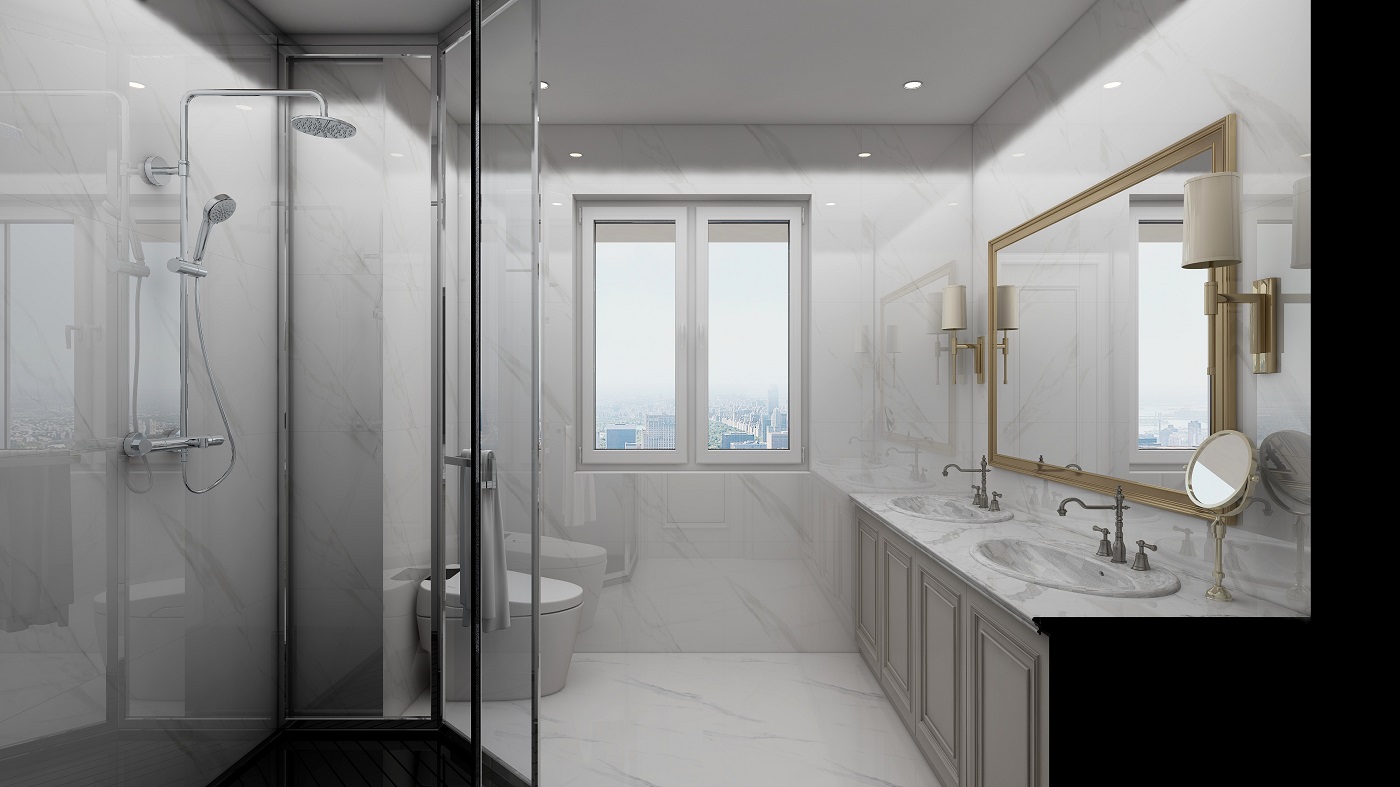
We provide customized aluminum solutions for bathroom glass systems, including different groove dimensions, anodized finishes, roller-compatible structures, and project-based profile optimization.
Our production process focuses on extrusion precision, dimensional consistency, and stable surface finishing quality. Depending on the project requirement, we can also support customized wall thickness, profile colors, and structural modifications for different installation methods.
Click Here to give solutions for Aluminum Profile
FAQ: U-Shaped Glass Profile Systems
Q1: What is the most common glass thickness used in bathroom sliding systems?
8 mm tempered glass is the most common option because it balances structural strength, installation flexibility, and manageable weight.
Q2: Can U-shaped profiles support 10 mm glass?
Yes. However, the groove width, gasket compression, and roller load capacity must all be designed specifically for heavier glass panels.
Q3: Why do sliding doors become noisy after long-term use?
In most cases, the cause is roller wear, profile deformation, or incorrect clearance between the glass edge and guide structure.
Q4: How long can anodized aluminum bathroom profiles last?
With proper thickness and anodizing above 15 microns, high-quality aluminum profiles can typically last 10–15 years in residential bathroom environments.
Q5: What is the most common installation mistake?
Ignoring wall alignment and thermal expansion clearance is one of the biggest causes of long-term roller and glass system problems.
Related Topics & Engineering References
How to Choose Between Anodized and Powder Coated
How to Choose the Right Thickness for Your Custom Aluminum U Profile
Customize U Profile for Glass Applications

 Email
Email Whatsapp