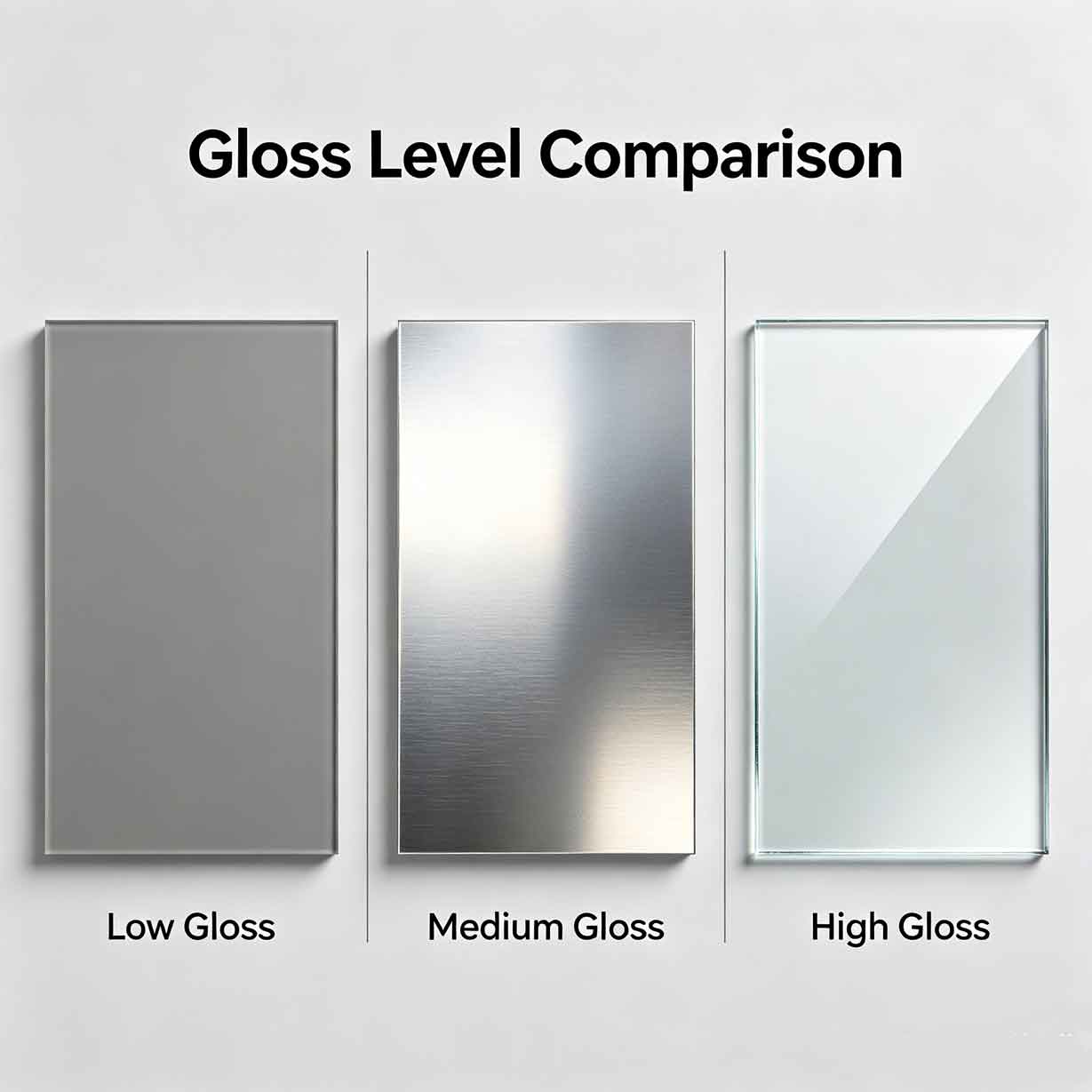
What is Gloss Level ?
When customers evaluate furniture aluminum profiles, one of the first visual impressions is surface brightness. In cabinet frames, glass door profiles, wardrobe handles, and decorative trims, the gloss level directly affects how premium the final furniture product appears. In our factory, we specialize in polished anodized aluminum profiles for furniture applications, and one of the most common questions we receive is: how bright can the surface actually be?
Our polished anodized furniture aluminum profiles commonly reach 75–95 GU under 60° gloss testing, depending on the alloy, polishing method, and anodizing finish. For high-gloss decorative applications, the surface can achieve a mirror-like reflection that is clearly visible to the naked eye under indoor lighting. Compared with standard anodized aluminum, the reflected image appears sharper, cleaner, and more metallic.
What Is Polished Bright Anodizing for Furniture Aluminum Profiles?
Polished bright anodizing is a surface treatment process that combines mechanical polishing with anodizing technology. Before anodizing, the aluminum profile surface is mechanically polished using abrasive wheels, polishing compounds, and fine buffing processes to reduce microscopic surface irregularities.
After polishing, the profile enters the anodizing line where an oxide layer is formed electrochemically. This transparent anodized layer protects the polished surface while maintaining the metallic gloss underneath.
In our production experience, achieving stable high-gloss results depends heavily on:
-
Aluminum alloy purity
-
Extrusion surface smoothness
-
Polishing consistency
-
Oxide film transparency
-
Quality control during anodizing
Even small extrusion defects become highly visible on bright polished surfaces, which is why high-gloss furniture profiles require stricter manufacturing control than standard matte anodized products.
International Standards for Aluminum Surface Gloss
Surface brightness is usually measured using a gloss meter under a 60° measurement angle, expressed in GU (Gloss Units). Several international standards are commonly referenced in the aluminum industry:
-
ISO 2813 — Paints and varnishes gloss measurement
-
ASTM D523 — Standard test method for specular gloss
-
DIN EN ISO 7668 — Gloss evaluation for metallic surfaces
Although these standards are often associated with coatings, they are widely used for anodized and polished aluminum profile evaluation as well.
Common Anodized Surface Gloss Levels
Different anodized finishes produce completely different visual effects.
| Surface Finish | Typical Gloss Level (60° GU) | Visual Appearance |
|---|---|---|
| Sandblasted Matte Anodized | 10–25 GU | Soft matte texture |
| Brushed Anodized | 25–50 GU | Satin metallic effect |
| Standard Bright Anodized | 50–75 GU | Moderate reflection |
| Polished Bright Anodized | 75–90 GU | Strong metallic gloss |
| Mirror Polished Anodized | 90+ GU | Mirror-like reflection |
For furniture aluminum profiles, most customers prefer the 70–85 GU range because it balances premium appearance with better scratch visibility control.
Polished vs Brushed vs Powder Coated Surface Comparison
| Surface Type | Gloss Level | Texture | Reflection Effect | Typical Furniture Application |
|---|---|---|---|---|
| Polished Anodized | High | Smooth | Strong reflection | Luxury cabinet frames |
| Brushed Anodized | Medium | Hairline texture | Soft metallic reflection | Modern furniture systems |
| Powder Coated | Low to Medium | Coated surface | Diffused reflection | Minimalist furniture styles |
From our experience supplying cabinet and wardrobe manufacturers, polished anodized finishes are especially popular in glass cabinet systems, aluminum frame doors, and decorative trim profiles where visual brightness enhances the premium appearance of the furniture.
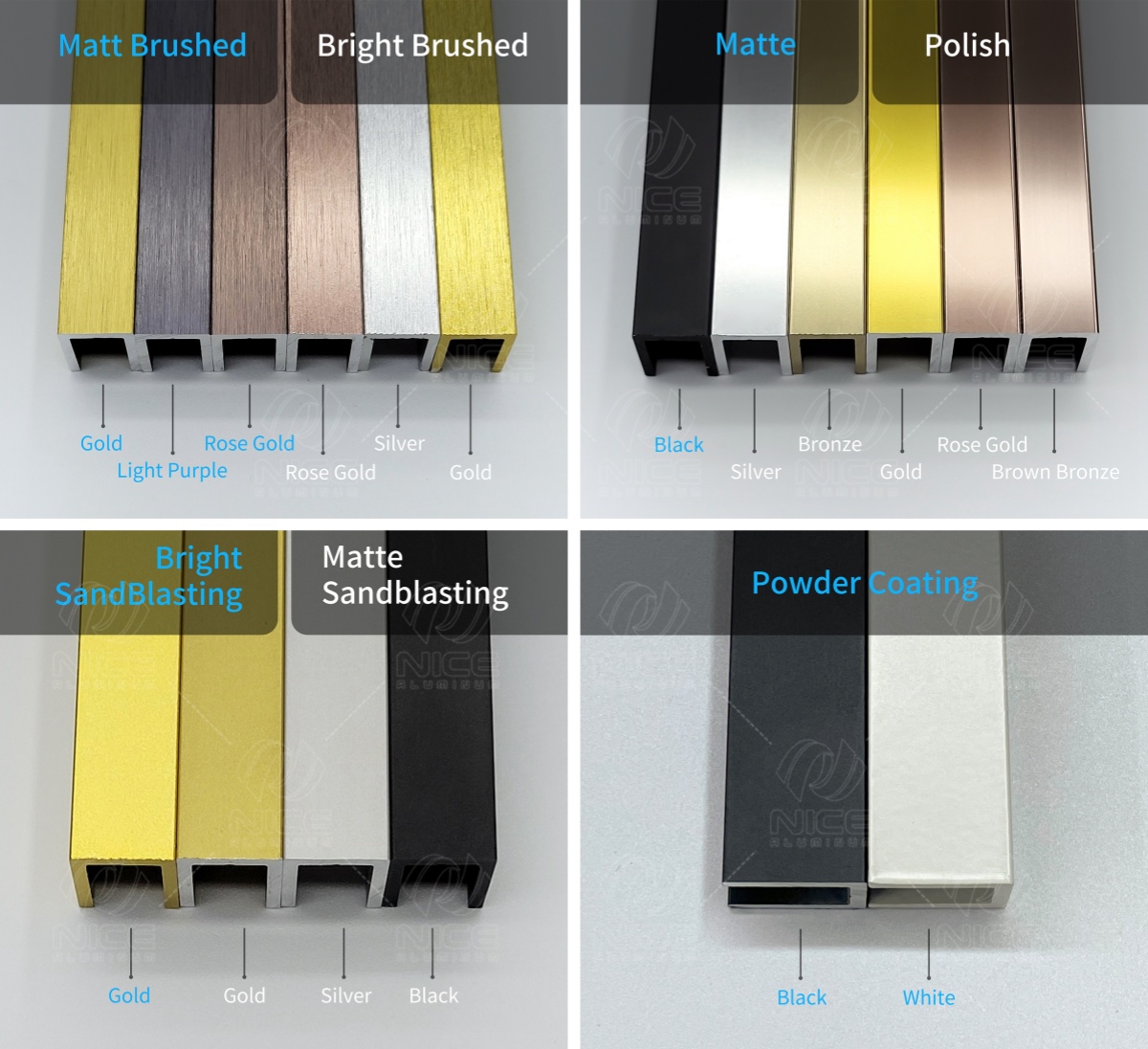
The Gloss Range We Commonly Produce
Our factory has more than 20 years of experience manufacturing custom furniture aluminum profiles, including polishing, brushing, anodizing, CNC machining, and deep processing. For polished anodized surfaces, we commonly produce:
-
Standard furniture bright anodizing: 65–80 GU
-
High-gloss cabinet frame profiles: 80–90 GU
-
Mirror-like decorative profiles: 90–95 GU
Under direct lighting, these surfaces provide clear metallic reflection and visibly higher brightness compared with conventional anodized aluminum. In showroom environments, the difference is immediately noticeable by eye, especially on dark-colored furniture or glass door systems.
For customers developing premium furniture collections, we also provide customized gloss matching according to product positioning, lighting environments, and decorative style requirements.
Click Here Get Custom Quote
FAQ About Polished Anodized Aluminum Profile Surface Brightness
What is the gloss level of polished anodized aluminum profiles?
Most polished anodized aluminum profiles used in furniture applications typically range from 75–95 GU under 60° gloss measurement. The final brightness depends on the aluminum alloy, polishing quality, anodizing transparency, and surface flatness.
What does 90 GU look like to the naked eye?
A 90 GU polished anodized surface usually creates a strong metallic reflection that appears close to a mirror effect under indoor lighting. Compared with standard anodized aluminum, the surface looks brighter, cleaner, and more premium in cabinet and furniture applications.
Is polished anodized aluminum easier to scratch?
High-gloss polished surfaces can make scratches more visible than brushed or matte finishes because light reflects more directly from the surface. For this reason, many furniture manufacturers choose a balanced gloss range around 70–85 GU to maintain both decorative appearance and practical durability.
What is the difference between brushed anodized and polished anodized finishes?
Brushed anodized aluminum has a visible hairline texture with softer light reflection, while polished anodized aluminum has a smoother surface and stronger gloss reflection. Brushed finishes are often used for modern minimalist furniture, while polished finishes are preferred for luxury cabinet and glass frame systems.
Can you customize the gloss level for furniture aluminum profiles?
Yes. We can customize different gloss levels according to furniture design requirements, showroom lighting conditions, and market positioning. Our factory commonly produces standard bright anodized finishes, high-gloss decorative surfaces, and mirror-like polished aluminum profiles for premium furniture applications.
Other relevant information about the aluminum profiles for furniture
How We Help Customers Customize Furniture Aluminum Profiles for Their Real Applications
How Should the Furniture Industry Choose Between Anodized and Powder Coated Aluminum Profiles?
Aluminum Profile Surface Finishes Explained for Furniture and Architectural Applications

 Email
Email Whatsapp