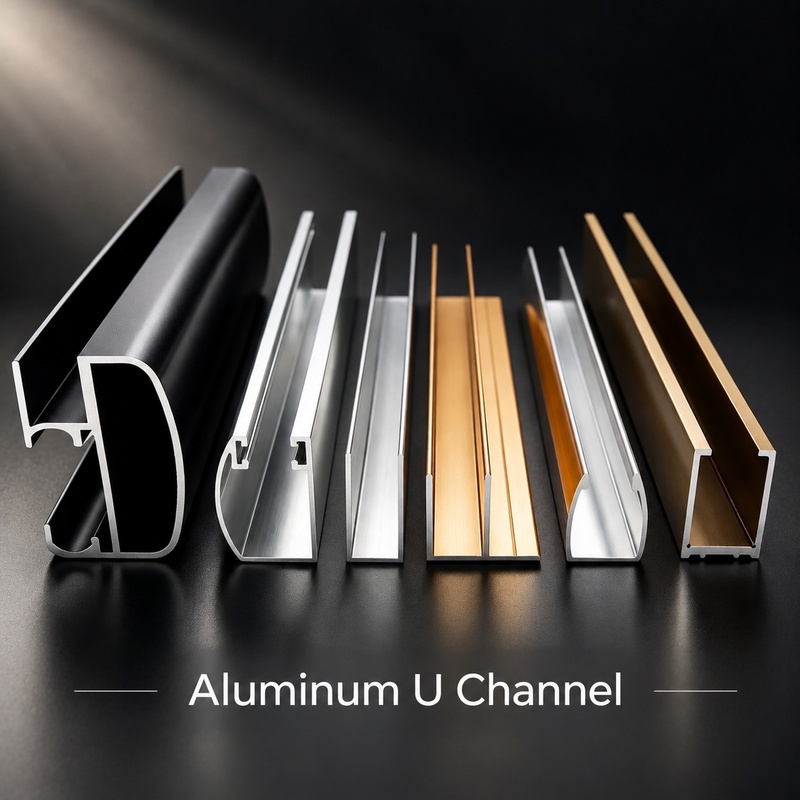
Aluminum Profiles for Glass Panels
Direct answer: Aluminum profiles for glass are extruded sections that support, frame, clamp or protect glass panels. NICE Aluminum supplies 6063-T5 profiles in U-channel, H-profile, L-profile, frame and edge-trim configurations for furniture and architectural applications. Current standard solutions cover common 6 mm, 8 mm, 10 mm and 12 mm glass systems, with custom cross-sections available for project-specific assemblies.
The correct profile is determined by the glass thickness, installation method, edge condition and required finish—not by appearance alone. A profile that fits the glass but does not match the gasket, fixing method or load path can create movement, noisy contact or difficult installation. This page helps buyers define the right extrusion before requesting a sample or production quote.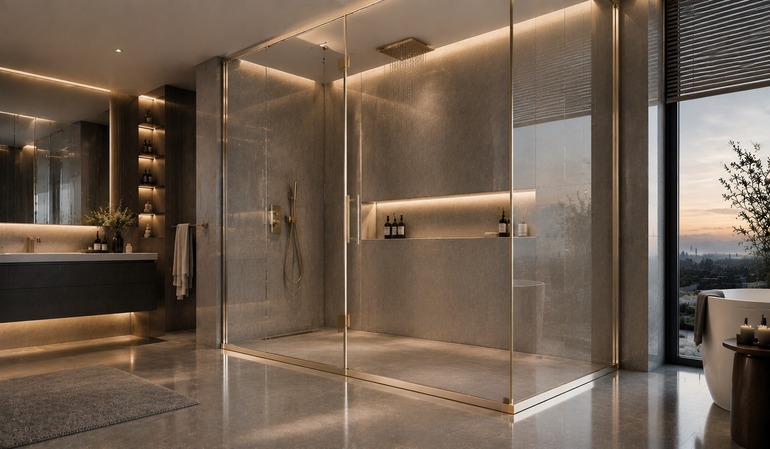
How to select the right specification
| Selection factor | Available direction | Why it matters |
|---|---|---|
| Profile geometry | U-channel, H-profile, L-profile, frame profile, edge trim | Controls how the glass is held, joined or protected |
| Glass compatibility | Common 6, 8, 10 and 12 mm systems | The actual groove and gasket must match the panel |
| Material | 6063-T5 aluminum | Supports detailed extrusion and a clean finished surface |
| Finish | Anodized, powder coated, brushed, matte or custom color | Matches corrosion, appearance and maintenance needs |
| Fabrication | Cutting, drilling and CNC machining to drawing | Reduces downstream processing and assembly steps |
Choose the profile by function, not by name
Use a U-channel when the profile needs to receive or edge a single panel. Use an H-profile when two panels must meet in one linear connector. L-profiles work as edge guards or corner trims, while complete frame profiles are better when the glass must become part of a cabinet door, display unit or partition assembly. Send a section drawing whenever the profile performs more than one function.
Match the groove to the complete glass assembly
Nominal glass thickness is only the starting point. Confirm whether the assembly includes a PVC, EPDM or silicone gasket, whether the glass edge is polished, and whether the panel must be removable. NICE Aluminum can review the glass thickness, gasket concept and target fit together so the extrusion is not specified in isolation.
Specify the operating environment
For humid interiors, kitchens, bathrooms or exterior-adjacent areas, tell us the cleaning method and exposure conditions. Anodizing creates a protective oxide layer, while powder coating provides broad color options. The final finish should be selected against the application, not copied from another project.
Prepare an RFQ that engineers can act on
Include the profile drawing or reference image, glass thickness, finished length, quantity, surface finish, color standard, visible faces, fabrication needs and packing method. If the cross-section is new, NICE Aluminum can support profile design, die development, extrusion, CNC processing, finishing and quality control as one coordinated workflow.
Frequently asked questions
What aluminum grade is used for glass profiles?
The current NICE Aluminum glass-profile range is based on 6063-T5 aluminum. If your project requires another alloy or temper, state it in the drawing and RFQ for engineering review.
Which glass thicknesses can these profiles support?
The current category specification lists common systems for 6 mm, 8 mm, 10 mm and 12 mm glass. Final compatibility depends on the exact groove, gasket and installation method.
Can the cross-section be customized?
Yes. Custom extrusion is appropriate when a standard U, H or L section cannot provide the required fit, fixing detail or appearance.
Which finishes are available?
The current range includes anodized, powder-coated, brushed, matte and custom-color options. Finish availability should be confirmed against the profile and order requirement.
What should I send for a quotation?
Send a 2D section or sample, glass thickness, length, quantity, finish, fabrication details and packing requirements. This prevents an inaccurate quote based only on a product photo.
Related product resources
Technical references
The following external references explain extrusion design, aluminum alloys, surface finishing and quality-management principles. Product-specific requirements remain subject to the approved NICE Aluminum drawing and order specification.
<div clas

 Email
Email Whatsapp